
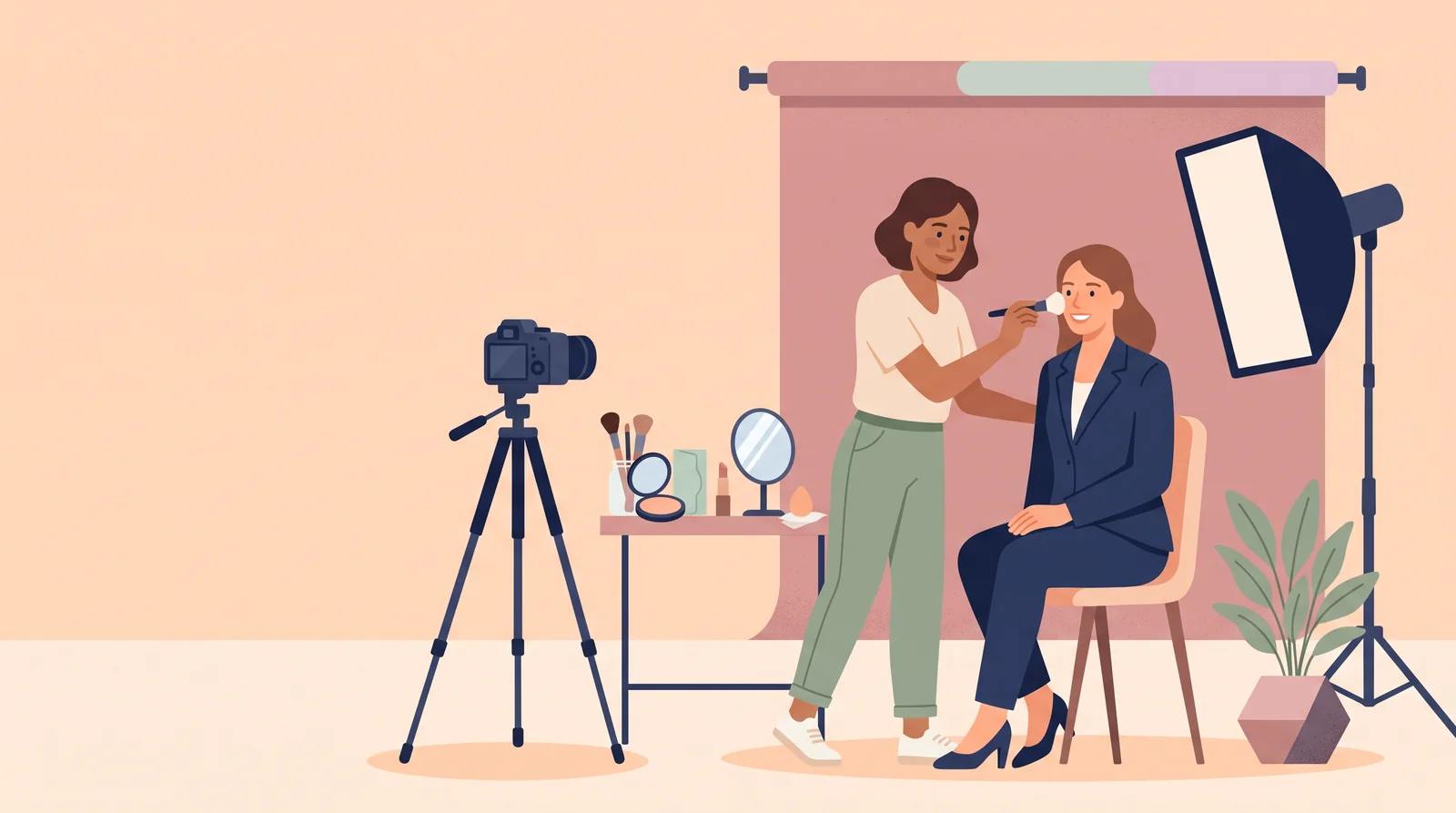
Headshot Makeup: What to Wear for Your Light, Your Purpose and Your Face
Search for headshot makeup tips and you'll find the same three words again and again: natural, matte, no shimmer. That advice isn't wrong. But it was written for one situation, a studio session with a big flash, and that's no longer how most headshots get made.
Today your headshot might come from a photographer's strobe, a phone by a window, a ring light on your desk, or an AI headshot generator working from your selfies. It might be for LinkedIn, a casting agent or your own website. Those situations need different makeup.
When we checked Google's US results for "headshot makeup" on 26 November 2026, the AI summary at the top ended by asking what the headshot was for. The pages ranking below it, mostly photographer blogs, forum threads and Pinterest pins, didn't answer that.
This guide sorts the advice by light, then by purpose. It also covers men properly, and explains how makeup carries into AI headshots.
The Short Version
If you only read one section, read this one.
- Moisturise first. Hydrated skin takes makeup better and looks healthier on camera.
- Use less coverage, matched carefully. The camera notices a line at the jaw more than a freckle.
- Control shine on the T-zone (forehead, nose and chin).
- Define brows and add warmth with a touch of blush and a lip colour close to your own.
- Skip anything new. The day of your headshot isn't the day to test a foundation or brow shape.
- Take a test photo in the same light first. It's the most useful tip in this guide.
Why Makeup Looks Different on Camera
Three things change between your mirror and a photo.
Light is more directional. A flash or a single window exaggerates texture and shine in a way the mixed light of a bathroom doesn't.
The photo freezes one moment. In person, a slightly shiny nose doesn't register because you're moving. In a still image, it's all people look at.
The image gets small. Most headshots are viewed as a thumbnail on LinkedIn, a casting site or a team page. At that size, subtle makeup disappears and only contrast is left: brows, lashes, lip colour and any line where foundation stops.
So good headshot makeup isn't "more makeup". It's makeup that holds up to directional light and still reads at thumbnail size.
Headshot Makeup by Lighting
This is the part most guides skip. Find your light, then adjust.
| Lighting | What it does to skin | Base and finish | Watch out for |
|---|---|---|---|
| Studio flash or strobe | Bright and crisp, picks up shine and reflective particles | Matte or satin base, set the T-zone lightly | Heavy HD or silica powder, shimmer, white cast from too much powder |
| Window or natural light | Soft and flattering, slightly lower contrast | Satin finish, a little glow on cheekbones is fine | Looking flat. You may need slightly more brow, blush and lip |
| Ring light | Even and frontal, flattens the face and lights every pore | Light coverage, set only where you shine | Flatness. A touch of bronzer under the cheekbones helps |
| Phone camera (auto mode) | Phones often smooth skin and brighten faces automatically | Keep it light. The phone does some smoothing already | Over-powdering, which looks chalky once the phone adds its own processing |
| Outdoor open shade | Soft but cool-toned, can make skin look grey | Satin base, warmth from blush and a tinted lip | Sunscreen sheen in direct sun. Stay in the shade |
Studio flash: the flashback question
Flashback is the white or ghostly cast some makeup leaves in flash photos. Many ranking pages, and a widely shared forum thread, tell you to avoid any sunscreen containing zinc oxide. The cosmetic chemist behind Lab Muffin Beauty Science tested this directly, and the picture is more nuanced.
Her tests found that the biggest culprit is silica, the main ingredient in many "HD" translucent setting powders. Of the powders she photographed, only one gave severe flashback, an HD powder that, like most HD powders, is mostly silica. Zinc oxide and titanium dioxide, the mineral sunscreen filters, can cause a whitish glow, but not always, and she notes that most SPF products don't cause flashback at all. The amount you apply matters more than whether an ingredient is present.
What that means for your shoot:
- Use setting powder sparingly, with a fluffy brush, and only where you get shiny.
- Don't skip sunscreen out of fear. Do the test below instead.
- Test it. Before the day, take a flash photo of your full makeup with a phone flash. If you see white patches, use less powder or switch products. This is the method Lab Muffin calls the most foolproof.
Window and natural light: you can afford a little glow
Soft daylight is the most forgiving light, which is why it's the go-to for professional headshots taken at home. It also lowers contrast, so features can fade. Keep the base satin, define the brows a little more and don't skip blush. A cream highlight on the cheekbones looks natural here when it would flare under flash.
Ring light and phone: keep it lighter than you'd expect
A ring light hits your face straight on and removes the shadows that give it shape. Add some back with a matte bronzer under the cheekbones and along the jaw, well blended.
Phone cameras add their own processing, and many soften skin automatically. Heavy powder plus phone smoothing can look plastic, so use the lightest coverage you're comfortable with. If you're unsure whether your photos look "off" because of makeup or because of the camera, our guide on how to look good in photos explains how light, distance and lens distortion change your face.
Headshot Makeup by Purpose
The same face needs slightly different makeup depending on who's looking at the photo.
| Headshot for | Goal | Makeup level | Key rule |
|---|---|---|---|
| LinkedIn or corporate | Approachable and credible | Light: what you'd wear to an important meeting | Look like you on a good workday |
| Acting | Show casting exactly who walks in | Minimal and true to your face | Never hide features you'll have in the room |
| Personal brand or website | Match your brand and audience | Light to medium, can carry a signature lip or liner | Consistent with how clients see you on video or in person |
LinkedIn and corporate headshots
Recruiters and clients will meet you on video or in person, so the photo should match. Even skin, groomed brows and a neutral lip are enough. Leave out a strong lip or a winged liner unless you wear them every day at work. Our LinkedIn headshot guide covers the rest of the brief, from framing to background. If you're comparing a photographer with other options, our guide to headshot photography explains what a studio session includes.
Acting headshots
Casting directors want to see the person who will walk into the audition. A heavy contour that changes your face shape, or lashes you never wear, works against you. Keep the makeup minimal and true to your skin. Cover temporary blemishes if you like, but don't hide permanent features such as freckles or scars that will be in the room. Our actor headshot guide explains the commercial vs theatrical looks.
Personal brand headshots
You have more freedom here. Keep a signature red lip or bold brow if it's how clients see you on video and in person. The test: would a client recognise you from the photo on a Zoom call?
Headshot Makeup for Men
"Headshot makeup male" is one of the related searches Google shows for this topic, yet most ranking pages give men a single line. Here's a five-minute routine that nobody will notice:
- Wash and moisturise 30 minutes before. Dry skin looks flaky and dull on camera.
- Kill the shine. Press a blotting sheet on the forehead, nose and chin, then dust a tiny amount of translucent or tinted mattifying powder on the same areas. Don't powder the whole face.
- Even out only what bothers you. A tinted moisturiser or a dab of concealer works on redness around the nose, a blemish or dark circles. Tap it in with a fingertip. Skip it if your skin is fairly even.
- Tidy the brows. Brush them up and trim long stray hairs. Don't change their shape.
- Lip balm. Clear, not glossy, so lips don't look dry or cracked.
Shave the morning of, or at least a few hours before, so redness has time to settle. If you have a beard, trim and line it a day or two before, so the edges look natural. Our headshot poses guide is the next step once your face is ready.
Makeup for AI Headshot Selfies
This is the situation no ranking page covers, even though it's now a common way to get a headshot. AI headshot generators learn your face from the photos you upload, then create new images of you. The makeup in your selfies feeds into that, in ways that aren't obvious.
Be consistent across every selfie. The tool is learning what your face looks like. If half your uploads have a bold lip and full brows and half are bare-faced, the results can mix the two unpredictably. Pick one look and use it for the whole set, ideally taken in one session.
Wear the look you want in the results. Your selfies teach the tool what your brows, lips and lashes look like. Want a polished look? Wear it in your selfies. Want a natural one? Skip heavy makeup in the uploads.
Light the selfies well. The lighting advice above still applies. Face a window, turn off overhead lights and avoid flash, which can add flashback or shine that the tool may treat as part of your skin. Our guide to how AI headshot generators work explains why clean source photos matter.
What AI retouching handles and what it can't
| Usually handled by AI tools | Not reliably fixed |
|---|---|
| Shine on the forehead and nose | Brow shape and thickness |
| Small blemishes and minor redness | Lip colour that's too strong or too pale |
| Slight unevenness in skin tone | Foundation that doesn't match your neck |
| Some under-eye shadow | Flashback or white cast baked into the photos |
| Heavy contour that changes your face shape |
This reflects how these tools generally work, and results vary from tool to tool. In short: AI is good at the kind of fixes a retoucher makes, and poor at undoing choices you made on your face. So spend your effort on the right-hand column. A matched base, natural brows and a lip close to your own colour give the tool the best material. Our roundup of the best free AI headshot generators compares the tools we've tested.
Step-by-Step Headshot Makeup Routine
Use this as a checklist, adjusted for your light and purpose above.
- The night before: moisturise and get some sleep. Retouchers can soften a blemish, but tired eyes are hard to fix.
- Prep: moisturiser, then sunscreen if you need it. Give each a few minutes to settle.
- Base: a light foundation or skin tint, matched in daylight on your jaw. Blend down onto your neck so there's no line. Spot-conceal only where you need it.
- Set: a little powder on the T-zone and under the eyes. Less is more under flash.
- Brows: fill gaps with pencil or powder in short strokes. Keep the shape you have.
- Eyes: a neutral matte shadow, a thin line of brown or soft black liner close to the lashes, and mascara. Skip big false lashes, which can cast shadows and look heavy in a close crop.
- Cheeks: a little blush, smiled onto the apples of the cheeks. Add bronzer under the cheekbones only if your light is flat (ring light or phone).
- Lips: a colour one or two shades deeper than your natural lip, in a satin finish. Avoid heavy gloss, which reflects light.
- Test shot: take a photo in the light you'll use, with flash if the shoot uses flash. Zoom in on the jaw, T-zone and under-eyes.
- Pack for touch-ups: blotting papers, powder, lip colour and a small brush.
Common Headshot Makeup Mistakes
- Matching foundation on your hand. Match it on your jaw in daylight, and blend onto the neck.
- Baking with HD powder before a flash shoot. This is the classic cause of white flashback.
- Too much shimmer. Under flash, shimmery highlighter and eyeshadow read as shine or sweat.
- Overlining lips or reshaping brows. AI tools and retouchers won't undo these, and casting directors will notice.
The Bottom Line
Headshot makeup is about removing distractions, not adding drama. Match your base, control shine, define your brows and add a little warmth. Adjust for your light (matte with little powder for flash, a little glow for window light, a lighter hand for ring lights and phones) and for who's looking. Men need five minutes. For AI headshots, wear one consistent look across every selfie. Above all, take a test photo first.
Frequently Asked Questions
Do I need makeup for headshots?
No, but a little helps. Light, natural makeup evens out redness and controls shine, and both show up more on camera than in a mirror. Aim for you on a great day, not event makeup. AI headshot tools usually smooth shine and small blemishes, but they can't fix brow shape, lip colour or a foundation mismatch.
What should I avoid when doing makeup for headshots?
Avoid shimmer and glitter, very dewy foundation under studio lights, heavy HD or silica setting powder (the main cause of flashback), foundation that doesn't match your neck, harsh liner, big false lashes and overlined lips. Don't try new products on the day.
Should men wear makeup for headshots?
Most men only need five minutes: moisturise, blot or lightly powder the forehead and nose, use a tinted moisturiser or concealer only for redness or dark circles, tidy the brows and add a clear lip balm. Nobody should be able to tell.
Should I keep my hair up or down for professional headshots?
Wear it the way you wear it most days, so people recognise you. Keep it off your face enough that both eyes are clear, and smooth flyaways. If you're unsure, take frames both ways and match your makeup to the hairstyle.
How do I look great in a headshot?
Use light coverage matched to your neck, set the T-zone, define your brows and add warmth to the cheeks and lips. Make it more matte for flash and allow a little glow for window light. For AI headshots, upload well-lit selfies with the same makeup in each.
Sources
- Michelle Wong, "Why Make-Up Flashback Happens and How to Avoid It", Lab Muffin Beauty Science
- Google US search results, AI Overview, "People also ask" and related searches for "headshot makeup", retrieved via DataForSEO on 26 November 2026